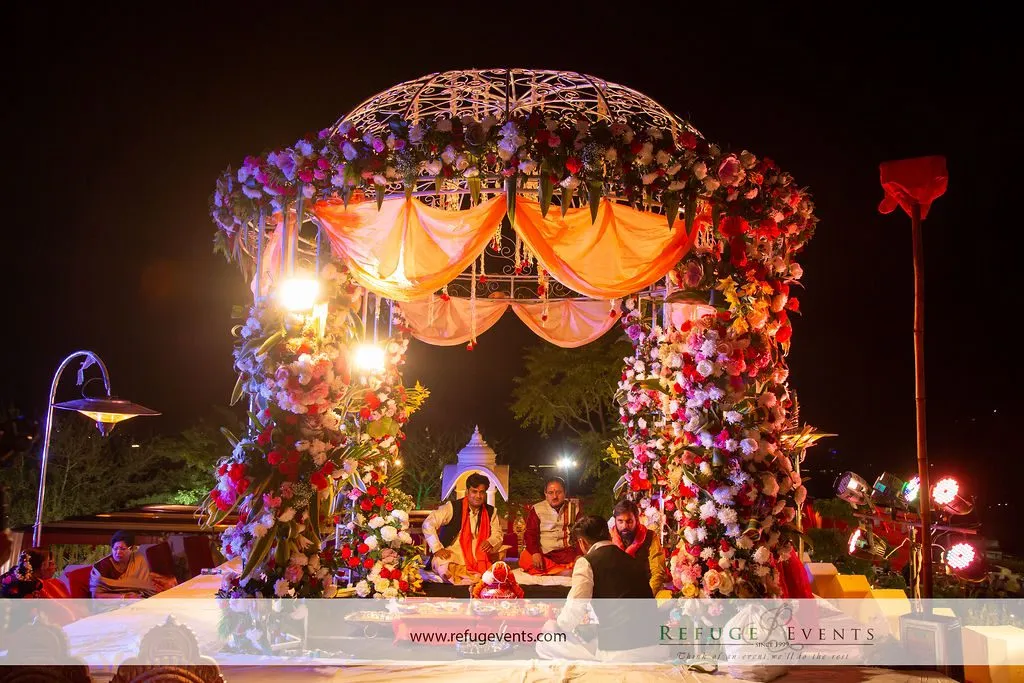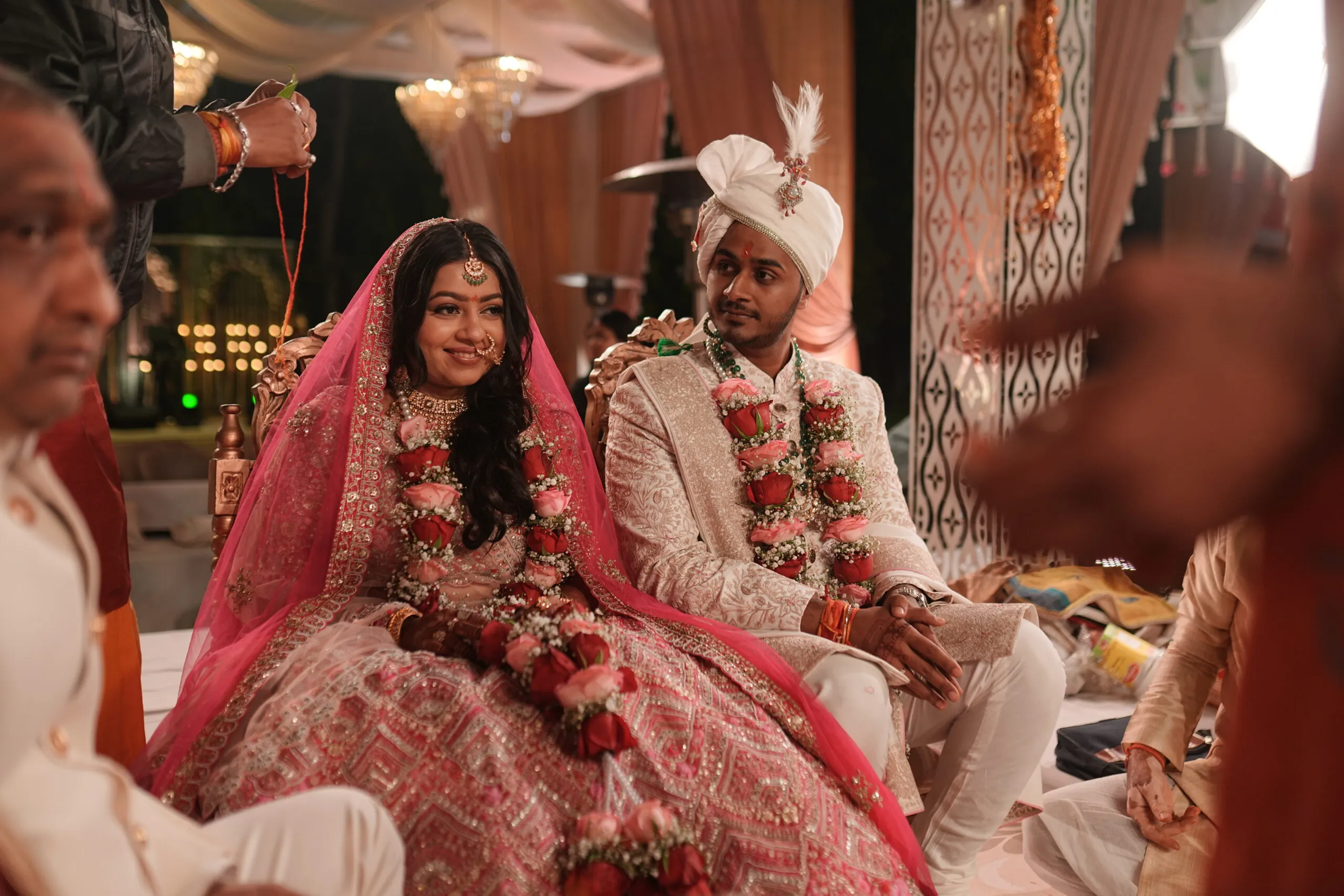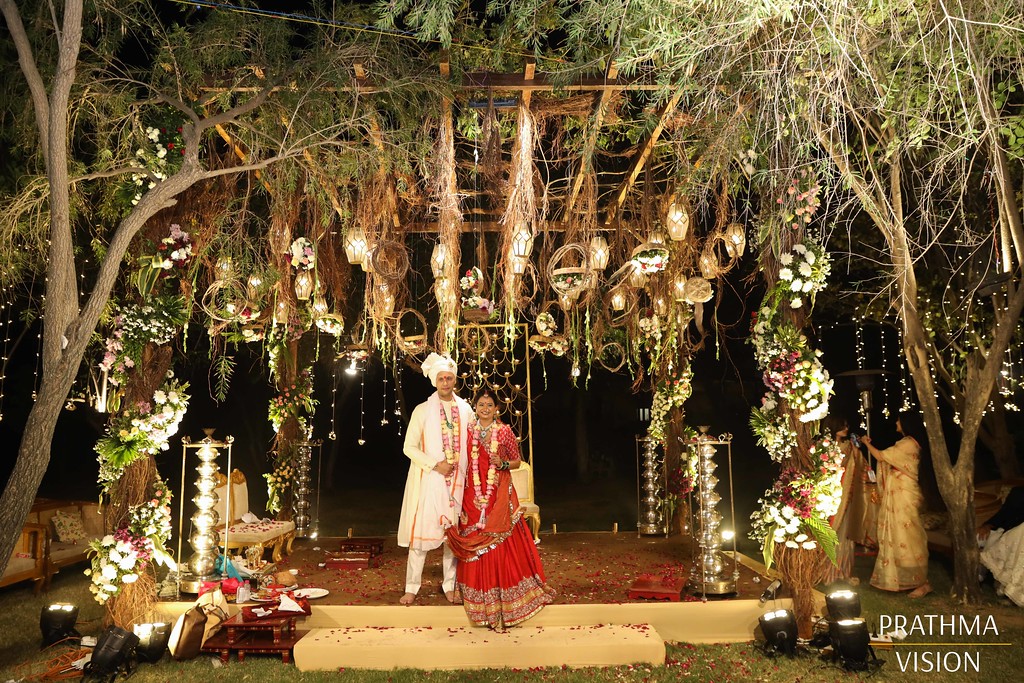
Dawn-to-Night Ritual Sequencing
The Dodhi Mangal starts at dawn and requires specific arrangements well before any other vendor is awake. We build every day's timeline from the first ritual, not the last.
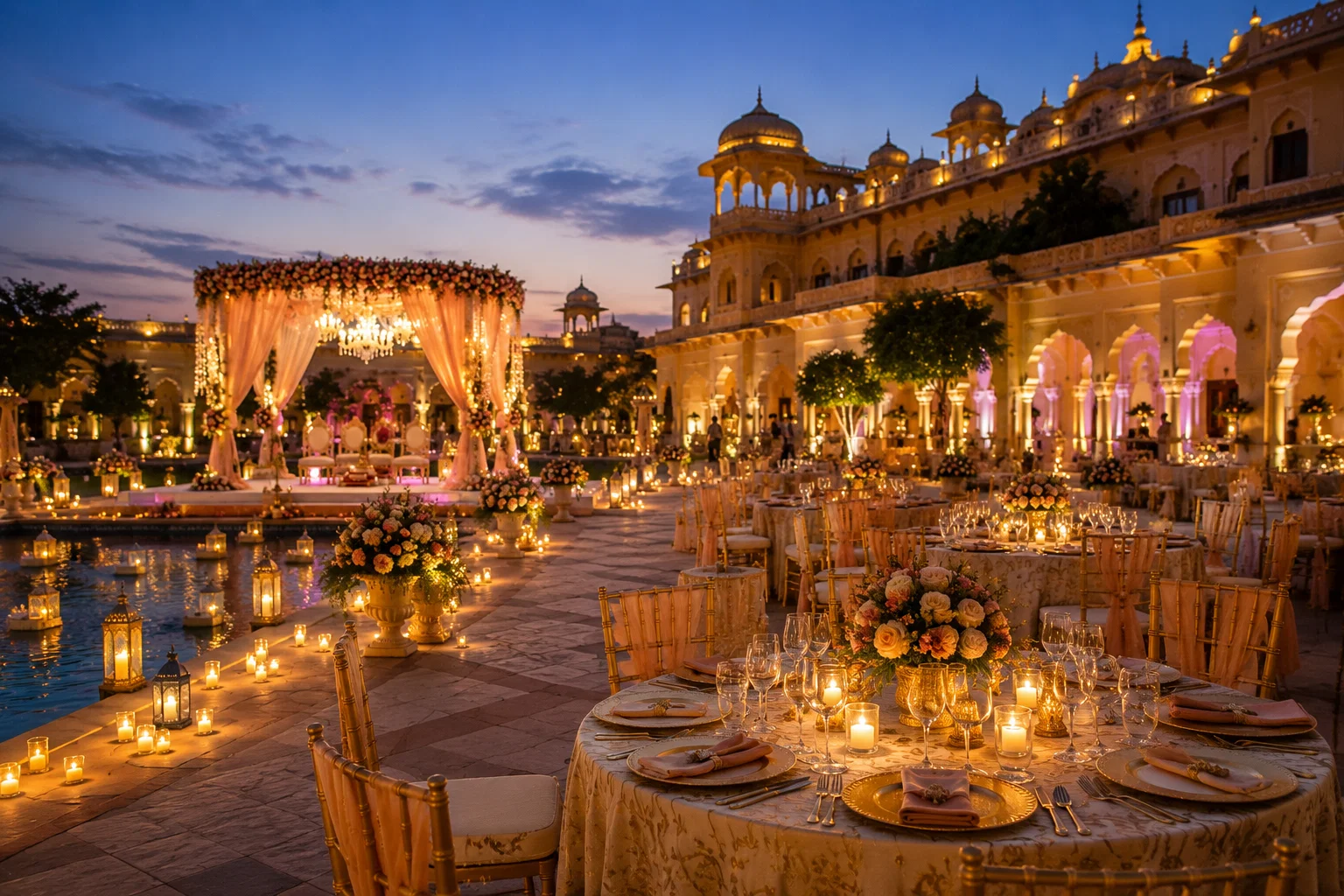
Wedding Planner in Kolkata, Built for Bengali Weddings
◆Planning a Bengali wedding is not the same as planning any other wedding in India. That's why most families searching for a wedding planner in Kolkata want more than a venue booking and a flower arch — they want someone who understands the rituals.
The sequence is precise. The emotions run deep, and the expectations — from the family, from the guests, from the panjika — are genuinely high. One missed cue during Shubho Drishti, one vendor who doesn't understand what Sampradan means to a Bengali father, one caterer who treats kosha mangsho as just another curry — and the entire event feels off.
That is exactly why families planning serious Bengali weddings in Kolkata call us. Refuge Weddings has planned weddings for Members of Parliament, Rajya Sabha members, prominent industrialists, and some of the most watched political families in India. We have worked across India's finest venues — Taj Pratap Mahal in Pushkar, Oberoi Udaivillas in Udaipur, Fairmont Jaipur, The Lalit Goa, ITC Grand Bharat in Gurugram. We are not a local outfit. We are India's wedding planning team, and we travel to you in Kolkata with 25+ years of experience, a full planning crew, and the kind of vendor relationships and operational depth that local planners simply cannot match.
If the wedding matters, this is who you call.
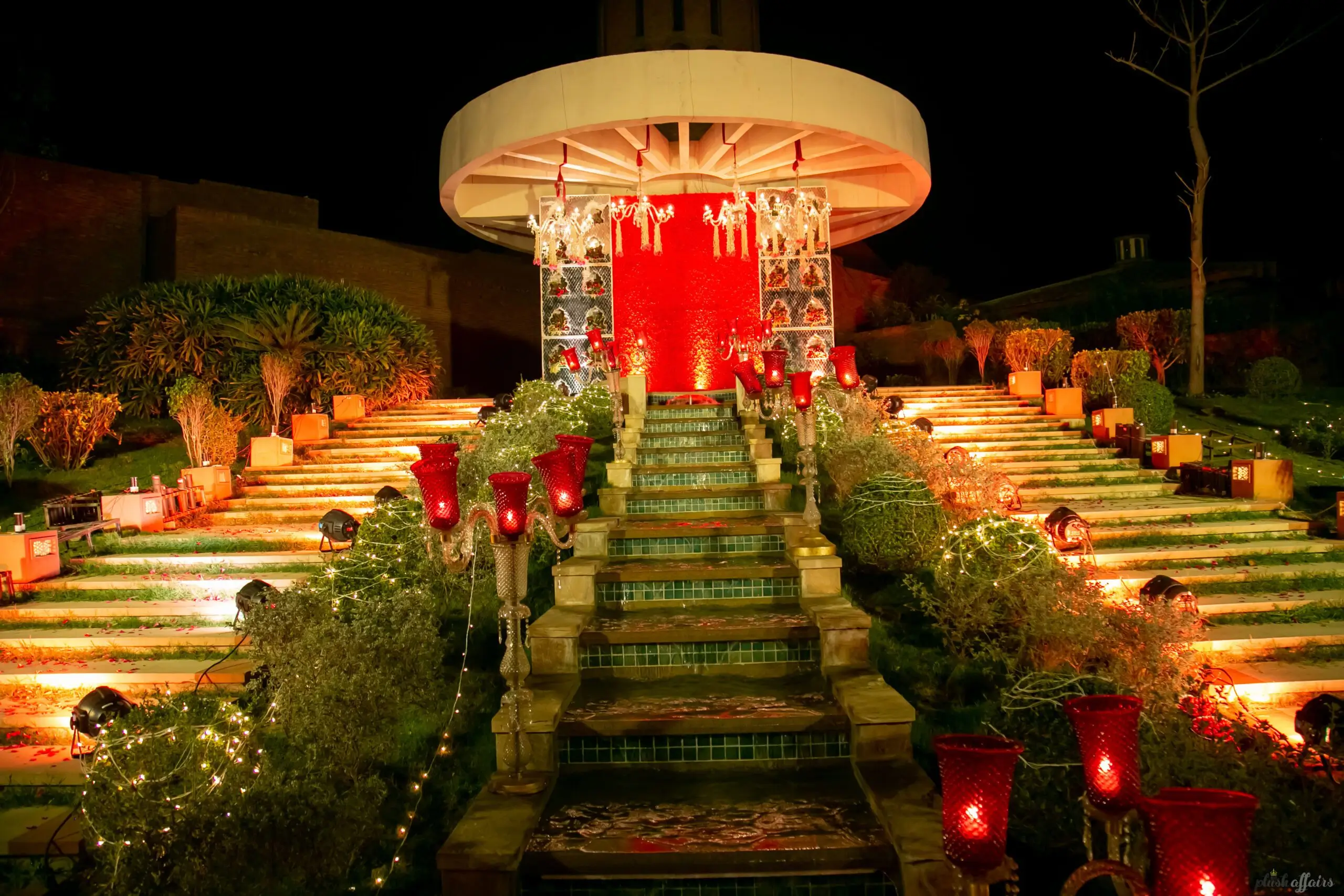
Most wedding organizers can book a venue, arrange flowers, and coordinate a caterer. A Bengali wedding needs more than that — it needs someone who has already lived through every ritual, every emotional beat, every logistical pressure point.
The Dodhi Mangal starts at dawn and requires specific arrangements well before any other vendor is awake. We build every day's timeline from the first ritual, not the last.
The groom's procession isn't just a logistics challenge — it's the moment that sets the emotional tone for everything that follows. We manage it accordingly.
We brief every photographer on exactly what happens during Shubho Drishti — in writing, in advance — so they don't miss the one frame every family wants.
Bengali weddings are not monolithic. We ask every family about their regional background at the first consultation. Every plan — ritual order, menu, priest briefing — is adjusted accordingly.
We travel to Kolkata with vendor relationships and operational depth built across 25+ years and 500+ weddings. Local familiarity is not the limiting factor for a serious wedding. Experience is.
Tell us your family background, your date, and your vision. We will take it from there.
Plan My Kolkata WeddingA Bengali wedding is not a single-day event. It is a sequence of rituals that unfolds across multiple days, each one with its own requirements, its own emotional weight, and its own logistics. Here is exactly what happens — and what our team manages at every stage.
This is the formal blessing ceremony where both families come together officially for the first time. Elders bless the bride and groom, gifts are exchanged, and the wedding is essentially announced to the extended family. It sets the tone for everything. We manage the venue setup, family seating, gift coordination, and photography briefing so the moment is captured properly.
This is one of the most emotionally loaded pre-wedding events, and most generic planners underestimate it. The bride's family hosts a large, celebratory meal — typically her favourite foods — as her last meal as an unmarried person in her parental home. The groom's family does the same separately. There is a bittersweet undercurrent to this event that no amount of decoration can manufacture; it has to be felt. Our job is to create the right atmosphere, handle the catering, manage the guest flow, and let the family be fully present in the moment rather than running logistics.
Early morning, before the Gaye Holud begins, married women of the family feed the bride curd and rice as a blessing for a prosperous life ahead. It is intimate, quiet, and important. We ensure the ritual space is set, the right elements are arranged, and the morning schedule accounts for this before the day's main events begin.
This is what most guests outside Bengal know as the "haldi ceremony," but a Bengali Gaye Holud is its own distinct event with its own mood. Turmeric paste — prepared in a specific way — is applied to the bride by the women of the family, amid dhol, ululation, and a lot of teasing. The groom has a separate ceremony at his home simultaneously. This is the most vibrant, colourful event of the entire wedding sequence. We handle the décor (marigolds, earthen lamps, yellow everywhere), the dhol players, the coordination between both family venues, catering for the celebration after, and photography setup so the golden light hits right.
The groom arrives at the wedding venue in a procession. The dhol plays, conch shells blow, and the mood shifts. Traditionally this was a palanquin; today it is usually a decorated car or open vehicle, but the sound and energy remain unchanged. We manage the procession route, timing, coordination with the bride's family, and the welcome arrangements at the venue entrance.
Before the ceremonies begin, the bride's father presents the groom with new clothing — a gesture of formal acceptance into the family. Simple in execution, significant in meaning. We ensure this moment is not rushed or lost in the shuffle of a busy wedding morning.
This is the centrepiece of a Bengali wedding, and if you have never seen it done well, you have missed something genuinely moving. The bride is carried into the wedding space on a wooden seat called a piri — typically by her brothers or close male relatives. She holds betel leaves in front of her face. The groom stands waiting. As she circles him seven times, they lower the leaves and look at each other for the first time as bride and groom. The room goes quiet. Then it doesn't. We brief every photographer and videographer in advance on exactly where to be, the precise moment the leaves drop, and how to capture it without stepping into the family's line of sight. We coordinate the brothers carrying the piri, the timing of the music, the lighting. This moment cannot be redone. We treat it accordingly.
The bride and groom exchange flower garlands three times — and the groom's side typically tries to lift him up so the bride cannot reach, which makes this one of the more chaotic and joyful moments of the whole day. We coordinate the garlands, the timing, and make sure the space is clear enough for the family to crowd in without blocking the cameras.
There is no other moment in a Bengali wedding quite like this one. The bride's father formally places her hand in the groom's and gives her away, with a priest reciting mantras beside them. For most fathers, this is the moment that undoes them. We ensure the priest is coordinated, the setup is right, and our team handles every surrounding logistical detail so the family does not have to think about anything except this.
The bride and groom circle the sacred fire seven times. Each round carries a specific meaning — prosperity, health, children, love, friendship, family, and devotion. This is the legal and spiritual core of the wedding. The priest leads, and our team ensures the fire is set correctly, the timing with the pandit is confirmed, and the surrounding arrangements do not distract from the ceremony.
The groom applies sindoor to the bride's hair parting. She becomes his wife. Married female relatives then place the shakha (white conch shell bangles) and pola (red coral bangles) on her wrists — one bangle at a time, with patience and care. We coordinate the relatives, the positioning, the photography, and the timing so this is never rushed.
The morning after the wedding, the couple repeats certain vows in a quieter, more private ceremony. Most guests don't attend. It is rarely covered by planners or photographers, but it matters to the family and to the traditions. We include it in our planning timeline as standard — not as an afterthought.
The groom's family hosts the reception and formally welcomes the bride into her new home. She steps into a tray of alta — red dye — and leaves her footprints at the entrance, one of the most auspicious acts in the entire wedding sequence. There is a full reception feast, typically the largest catered event of the whole wedding cycle. We manage the welcome ritual setup, the alta arrangement, the reception décor, the catering, and the full guest hospitality for what is often a 300–500 person event.
The couple's first night together is preceded by a beautifully decorated room, traditionally with flowers, earthen lamps, and specific arrangements made by the family. Our décor team handles this with taste, matching whatever the family prefers.
A glimpse at the high-profile weddings our team has planned — from Kolkata to Udaipur to Goa.
Kolkata's wedding season runs October to February, following the panjika. The most popular dates in this window book 8–12 months in advance. The weddings we plan typically start upward of ₹70 lakh — covering full multi-event planning at five-star or heritage Rajbari venues.
| Tier | Guest Count | Venue Type | Approx. Total (Multi-Day) |
|---|---|---|---|
| Premium | 150–250 | Heritage Rajbari / 4-star | ₹70 L – ₹1.2 Cr |
| Luxury | 250–400 | ITC Sonar / Hyatt Regency | ₹1.2 Cr – ₹2 Cr |
| Ultra-Luxury | 400–600+ | Taj Bengal / Oberoi Grand buyout | ₹2 Cr – ₹4 Cr+ |
Five-star and heritage Rajbari properties represent the largest expense — often bundling catering and accommodation for multi-day events.
Bengali wedding menus are non-negotiable. Luchi, kosha mangsho, chingri malai curry, mishti doi, rosogolla — every dish matters.
Marigold and tuberose, earthen lamps, alta patterns, brass and clay — every setup is designed for the specific ritual it serves.
Dhol players, classical Rabindra sangeet for Aiburo Bhaat, folk artists for Gaye Holud, DJ for Bou Bhaat reception.
Pre-briefed on every ritual and emotional beat — not just booked. Kolkata specialists run ₹3 L – ₹8 L for multi-day Bengali weddings.
Dhol players, decorated Bor Jatri vehicles, vintage cars, guest transfers across multi-venue multi-day events.
The rituals are the what. Here is the how — everything our team handles so your family experiences the wedding, not the logistics.
We know Kolkata's wedding venue landscape. Heritage Rajbari properties in North Kolkata for Gaye Holud and Aiburo Bhaat. Taj Bengal, ITC Sonar, The Oberoi Grand, and Hyatt Regency for larger reception events. We match venue character to event type — not every ritual suits the same space.
Bengali weddings have a specific visual language — marigold and tuberose, earthen lamps, alta patterns, red and white, brass and clay. We work within that language and elevate it. No generic "floral arch" packages. Every setup is designed for the specific ritual it serves.
The invitation sets the expectation. We design invitations that match the seriousness and warmth of a Bengali wedding — and manage the distribution logistics for outstation guests.
This is one area most planners miss entirely. Tatta — the beautifully decorated gift trays exchanged between families — is a Bengali wedding tradition with its own aesthetic and protocol. We handle the arrangement, presentation, and transport of tatta as part of our standard service.
A Bengali wedding menu is not a side note — it is half the event. Luchi, kosha mangsho, mochar chop, chingri malai curry, mishti doi, rosogolla, and a paan station at the end. We work with Kolkata's best caterers to get every dish right and coordinate the specific ritual foods required for individual ceremonies.
We do not just book a photographer. We brief them on every ritual, every key moment, every emotional beat to anticipate. A photographer who has never shot a Bengali wedding needs a detailed briefing to capture Shubho Drishti correctly. We provide that briefing — in writing, in advance.
For multi-day events with outstation guests — families travelling from Delhi, Mumbai, or abroad — we manage hotel coordination, airport pickups, and the hospitality experience from arrival to departure.
Dhol players, classical Rabindra sangeet performers for Aiburo Bhaat, DJ setups for the reception, folk artists for Gaye Holud — we source and manage entertainment that matches each event's mood rather than applying one generic entertainment package across the whole wedding.
For larger weddings and families with prominent public profiles, we manage security arrangements and guest flow as standard practice. Transportation — decorated Bor Jatri vehicles, vintage cars for the couple, inter-venue shuttles — all coordinated.
Bengali weddings are not monolithic. Families with roots in West Bengal (Ghoti families) follow somewhat different customs from families with East Bengal or Bangladeshi heritage (Bangal families). The ritual order, specific menu items, and certain ceremony details differ between the two.
A caterer who does not know the difference will serve the wrong fish preparation. A planner who does not know the difference will brief the priest incorrectly.
We ask every family about their specific regional background at the first consultation. Every plan — the ritual sequence, the menu, the priest briefing, the décor cues — is adjusted accordingly. This is not a small thing. For a Bengali family, it is the difference between a wedding that feels right and one that feels like someone else's.
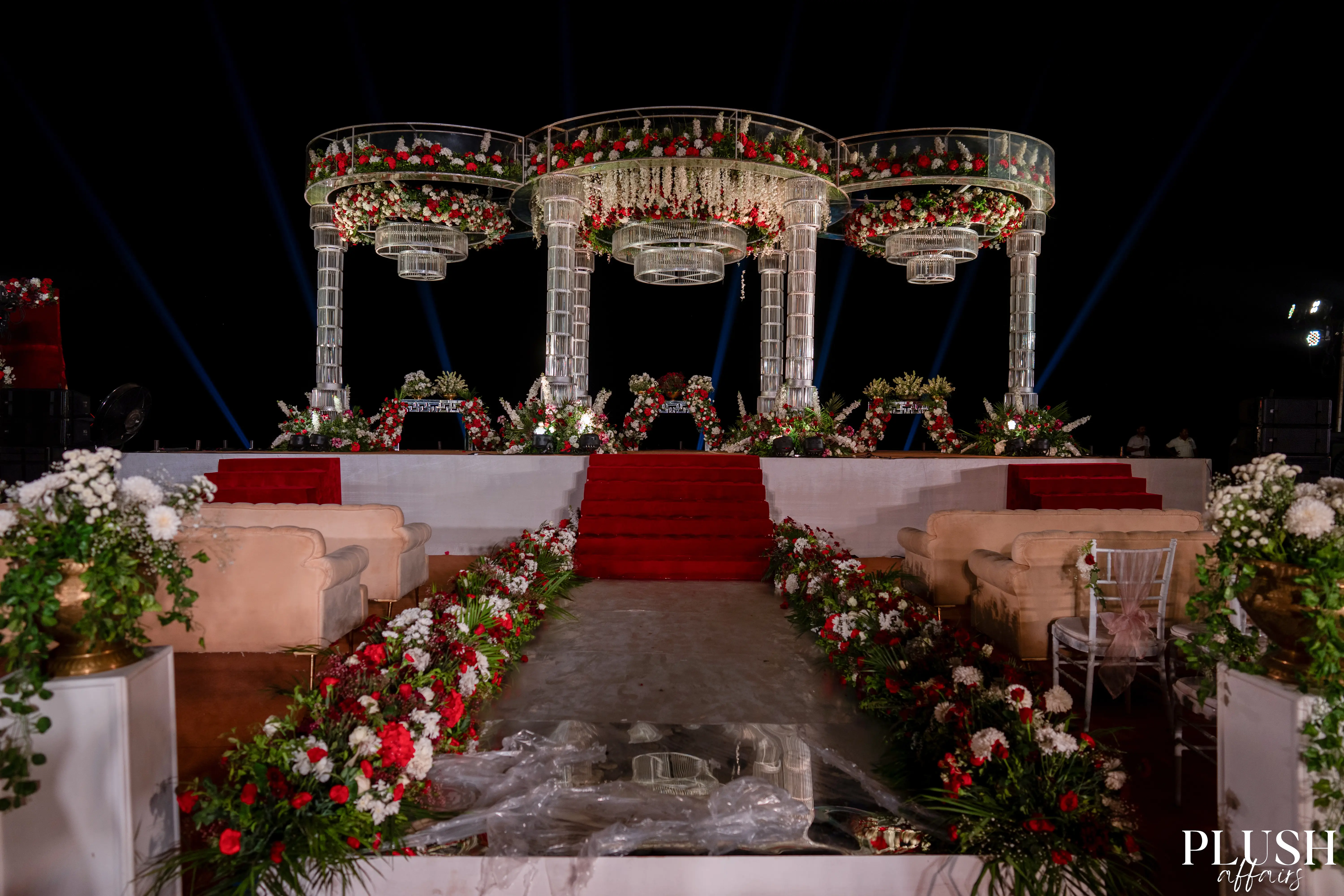
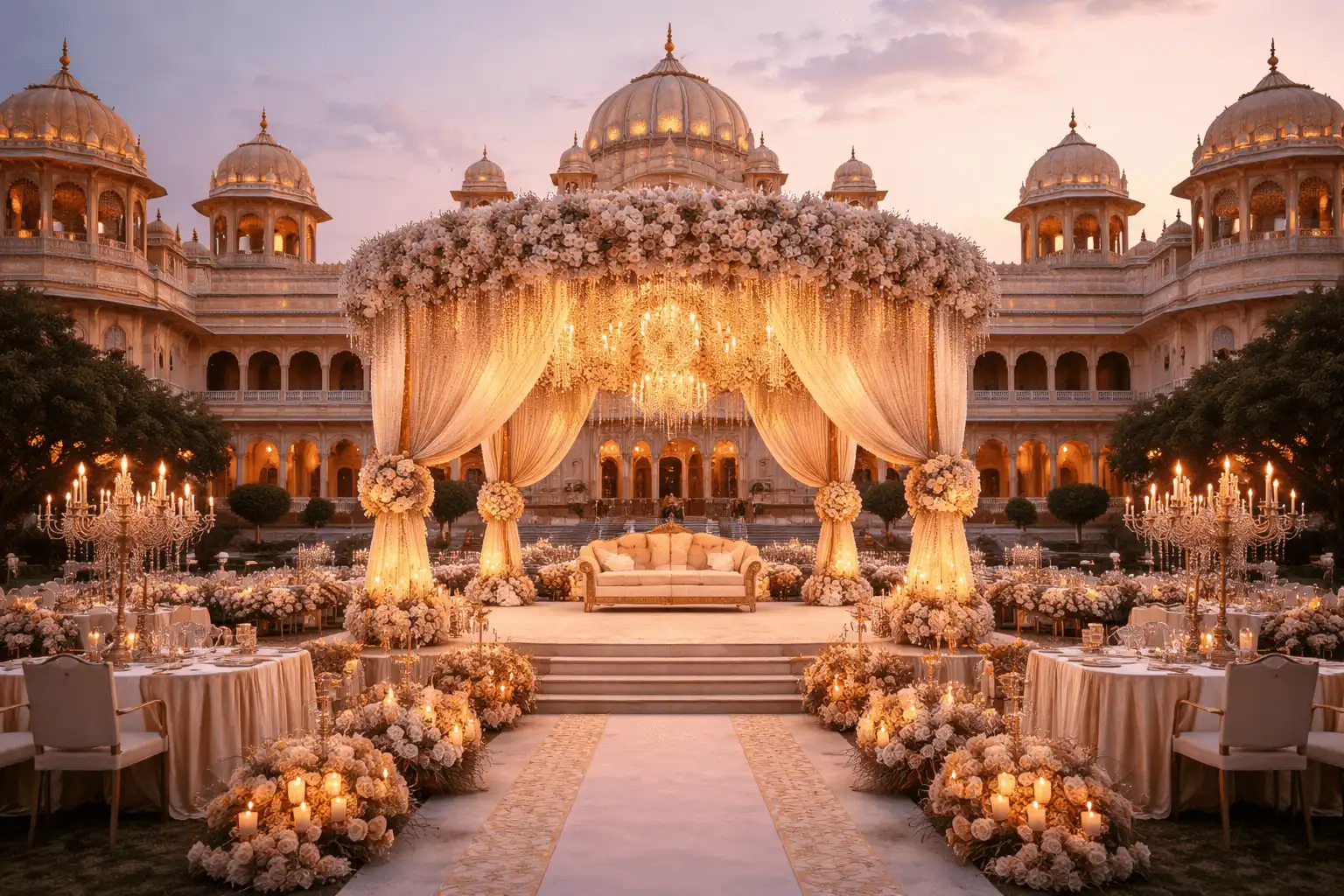
Kolkata's wedding season runs from October to February. This follows the Bengali almanac — the panjika — which identifies auspicious dates for marriage. Outside this window, Kolkata's humidity makes outdoor events genuinely uncomfortable. Inside the season, the city is at its best: cooler air, festive atmosphere, and full access to its best venues.
The most popular dates in this window book 8–12 months in advance. If you want Taj Bengal or The Oberoi Grand for a peak-season wedding, that conversation needs to start well before you think it does.
We recommend reaching out at least 9–12 months before your intended wedding date. For heritage Rajbari venues with limited availability, even earlier is better.
Kolkata is no longer just a hometown wedding city. A growing number of NRI families and couples based in other Indian cities are choosing it as a destination wedding location in its own right — and the reasons make sense once you look at them.
The city has the venue depth for it. Five-star properties like Taj Bengal and ITC Sonar sit alongside heritage Rajbari mansions that simply don't exist in most other Indian cities. Add in direct international flight connectivity, a compact city layout that makes multi-venue logistics manageable, and a food and culture identity strong enough that guests genuinely want to explore it — and Kolkata starts to look like an obvious choice, not a fallback one.
A destination wedding in Kolkata works especially well for families who want their out-of-town guests to experience the city, not just attend a ceremony. Guests get a few days near Victoria Memorial, the Howrah Bridge, and College Street between events — small things, but they shape how a wedding is remembered.
Running this well takes more coordination than a local wedding does. Flights and hotel blocks need to be planned around the ritual calendar. Vendors who don't usually deal with outstation logistics need clear briefs. Welcome dinners and post-wedding brunches need their own planning, separate from the core ceremonies.
This is where our experience planning destination weddings across India — Goa, Udaipur, Jaipur — translates directly. The skill set is the same: managing a multi-day, multi-venue event for guests who are seeing the city for the first time. We bring that experience to Kolkata and build the entire guest journey around it, from arrival to the final send-off.
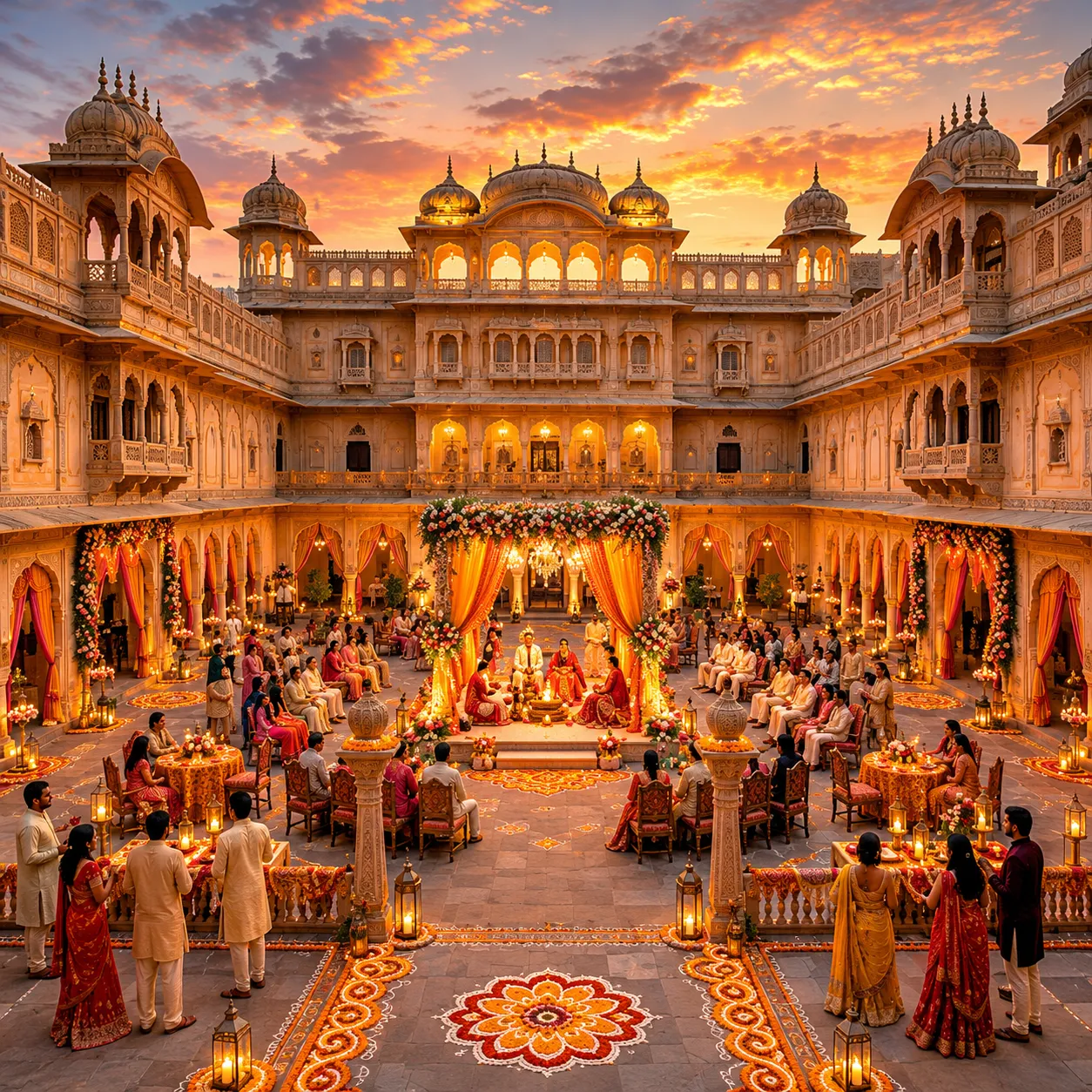
The city's most recognised luxury wedding property. Large banquet spaces, impeccable service, and a name that every wedding guest knows. Best suited for large reception events and Bou Bhaat celebrations.
Known for its garden spaces and contemporary architecture. Works well for multi-event weddings where outdoor and indoor settings are used on different days. Excellent for Gaye Holud garden setups.
Heritage, central Kolkata, and old-world atmosphere. For families who want the city's most classic address. Grand colonial architecture that serves as a timeless backdrop for every Bengali wedding function.
Modern, large-capacity, and well-suited for bigger guest lists at reception events. A practical choice when the guest count pushes past 500 and the function requires a contemporary hotel's operational scale.

One of the finest heritage wedding properties near Kolkata, suited for destination-style Bengali weddings where the entire guest experience is built around the property. Carries the character of an ancestral estate — something no city hotel can manufacture.
Here is the honest answer to a question many families ask privately: who is actually the best wedding planner in Kolkata for a high-stakes Bengali wedding — a local name, or a team that has done this at scale across India?
Local planners know the local vendor market. That is genuinely useful. But for a serious wedding — where the family has a public profile, where guests are flying in from across India, where rituals need to be executed without error — local familiarity is not the limiting factor. Experience is.
We have planned weddings for Shri J.P. Nadda's son, Members of Parliament, former Rajya Sabha members, and prominent industrial families. The operational standards we bring to Kolkata are the same ones we apply at Oberoi Udaivillas, Taj Pratap Mahal, and Fairmont Jaipur.
We operate from Delhi NCR, Nagpur, and Ahmedabad, with satellite operations in Goa and Jaipur. Our team travels to Kolkata. Our vendor relationships travel. Our operational standards travel. The planning process is identical regardless of city.
We have planned enough weddings across India to understand what genuine cultural fluency looks like — and what it costs a family when the planner is figuring things out on the day. We arrive in Kolkata with 25+ years of lived experience, not a learning curve.
Every event in the Bengali wedding sequence gets its own planning document, vendor brief, and day-of coordination team. Aiburo Bhaat, Gaye Holud, the wedding day, Bashi Biye, and Bou Bhaat reception — none of them are afterthoughts.
We are honest about money. We build your budget transparently at the first consultation and track it throughout. No hidden add-ons, no surprises. You always know exactly what you are paying for before anything is signed.
We start by understanding your family background (Ghoti or Bangal), your vision, your date range, and your budget — setting the right foundation before a single vendor is contacted.
We build a full ritual calendar from Ashirbad through Bou Bhaat, cross-referenced with the panjika, and match each event to its ideal venue type.
Every vendor — photographer, caterer, dhol player, priest — receives a written briefing specific to their role in the Bengali wedding sequence. No one learns on the day.
Hotel blocks, airport pickups, welcome arrangements, and hospitality coordination for outstation guests — all managed well before the first event begins.
Senior team members at every function, from Dodhi Mangal at dawn to the Bou Bhaat reception at night — managing timelines and resolving problems before the family ever notices them.
Post-wedding coordination for Bashi Biye and Phool Sajja, farewell logistics for outstation guests, and a final debrief so nothing is left unresolved.
We know every ritual in the Bengali wedding sequence — from Ashirbad through Phool Sajja — including regional variations between Ghoti and Bangal families. We don't learn on the day. We brief every vendor, priest, and photographer in advance, in writing.
Our team travels for every wedding we plan. We have done this across India — from Goa to Gurugram to Udaipur. We arrive in Kolkata well ahead of the first event, manage the full planning remotely before that, and work with on-ground vendors we trust. The planning process is the same regardless of city.
For a peak-season Bengali wedding (October–February), we recommend 9–12 months minimum. Auspicious dates and heritage venue slots go fast. The earlier you reach out, the more options you have. For heritage Rajbari venues with limited availability, even earlier is better.
This varies by package and scale. We offer full end-to-end planning and partial coordination for families who have already done some groundwork but want professional oversight for the rest. We clarify scope and fee in full at the first consultation — no hidden add-ons.
Yes. We plan for the complete event sequence: Aiburo Bhaat, Gaye Holud, the wedding day, Bashi Biye, and Bou Bhaat reception. Each event gets its own planning document, vendor brief, and day-of coordination team.
Yes, and regularly. Many families planning large weddings coordinate from Mumbai, Delhi, the UK, or the US. We handle the Kolkata-side planning and keep you involved through regular planning calls, documentation, and approvals — so you are not chasing vendors across time zones yourself.
At Refuge, the weddings we plan typically start upward of ₹70 lakh. That figure covers full multi-event planning at five-star or heritage Rajbari venues — Aiburo Bhaat, Gaye Holud, the wedding day, and a full-scale Bou Bhaat reception — with décor, catering, entertainment, and guest hospitality built to match. The exact number depends on guest count, venue, and how many events you want us to run. We walk through a detailed budget breakdown at the first consultation, so you know exactly what you are paying for before anything is signed.
Yes. A growing number of families now treat Kolkata itself as a destination — flying guests in from Delhi, Mumbai, the Gulf, the UK, and the US for a heritage Rajbari wedding or a five-star celebration at Taj Bengal or ITC Sonar. We handle the full destination wedding experience: guest travel coordination, multi-day event planning, accommodation blocks, and local sightseeing recommendations so visiting guests get a taste of the city alongside the wedding itself.
It depends heavily on who you hire and what you ask them to manage. A planner handling a single event or partial coordination will cost far less than one managing a full multi-day Bengali wedding sequence. At Refuge, our full-service packages — covering everything from Aiburo Bhaat to Bou Bhaat at five-star or heritage venues — start upward of ₹70 lakh. We discuss your specific requirements and venue choice before quoting a final figure, so there's no guesswork on either side.
A capable wedding planner in Kolkata should cover venue selection, décor and theme design, catering and menu curation, photography and videography coordination, guest hospitality, transportation, entertainment, and vendor management — at minimum. For Bengali weddings specifically, that list should also include ritual planning for events like Gaye Holud, Shubho Drishti, and Bou Bhaat, along with Bengali-specific details like tatta decoration that many planners overlook entirely. Refuge covers all of this; the full breakdown is in the services section above.
Start by checking three things. First, their portfolio — have they actually executed weddings at the scale and venue type you want, or are they learning as they go? Second, their transparency on pricing — a planner who won't give you a clear budget structure early on is a planner who will surprise you later. Third, their grasp of the rituals — for a Bengali wedding specifically, ask them to walk you through the sequence from Ashirbad to Bou Bhaat. If they can't, they haven't planned enough of these. Always get the scope of work and fee structure in writing before signing anything.
For a traditional Bengali wedding, the right planner is the one who treats the rituals as the foundation of the event, not decoration around it — someone who understands Ashirbad, Aiburo Bhaat, Shubho Drishti, Sampradan, and Bou Bhaat well enough to brief vendors, priests, and photographers without guesswork. Combine that with genuine venue experience across five-star and heritage properties, and you have the right fit. That combination — deep ritual knowledge plus national-level execution experience — is exactly what Refuge Weddings brings to every Kolkata wedding we plan.
A wedding organiser and a wedding planner are generally the same role, just different names for it, and the cost works the same way — it scales with the size of the wedding, the number of events, and the venue category. For a full Bengali wedding with multiple ceremonies at premium venues, our packages start at ₹70 lakh and above. We give you the complete breakdown before you commit to anything.
The best time to start was six months ago. The second best time is right now. Whether you are in Kolkata, calling from Delhi, or planning from overseas — our team is ready to talk. Share your date, your guest count, and your vision. We will take it from there.
Start Planning Today